
How to Choose the Best AI HR and Recruiting Tools in 2026
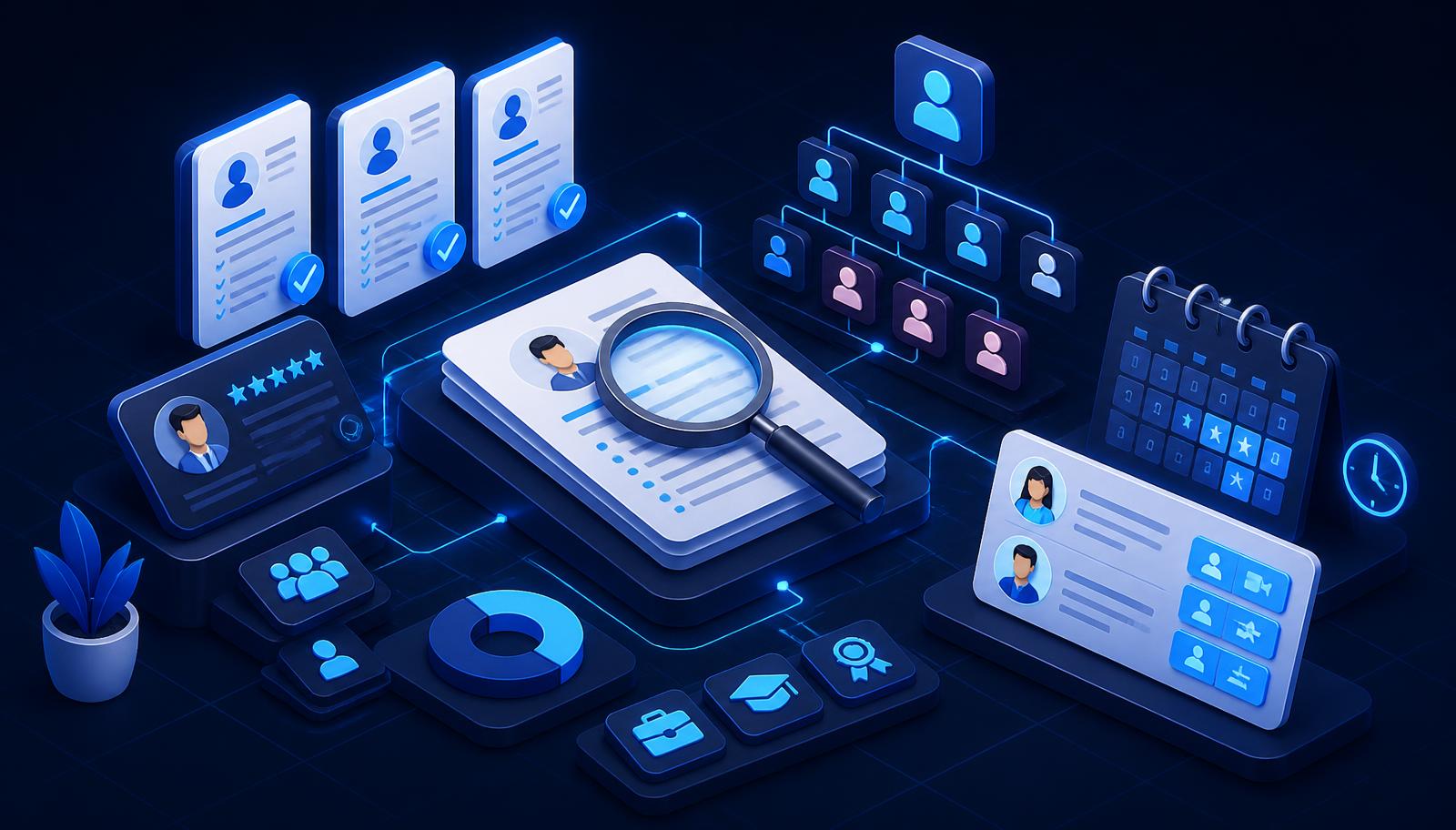
AI HR and recruiting tools are becoming an important part of how companies find candidates, screen applicants, manage interviews, support employees, improve onboarding, review performance, and understand workforce trends.
For years, HR and recruiting depended on job boards, resumes, applicant tracking systems, interviews, manual screening, spreadsheets, employee surveys, training materials, payroll systems, and manager feedback. Those processes still matter, but AI is changing how companies manage talent and employee operations.
AI can help write job descriptions, screen resumes, match candidates to roles, summarize interviews, create onboarding materials, answer employee questions, analyze engagement, support workforce planning, and reduce repetitive administrative work.
But choosing the right AI HR or recruiting tool is not just about finding the platform that promises faster hiring.
Some tools are built for recruiters. Others are designed for HR departments, staffing firms, small businesses, enterprise employers, employee experience teams, payroll teams, or learning and development departments. Some focus on recruiting. Others focus on employee support, performance, engagement, onboarding, compliance, or workforce analytics.
The best AI HR and recruiting tool is the one that fits the company's hiring process, employee size, compliance needs, HR systems, culture, and level of human review.
Why Choosing the Right HR Tool Matters
Hiring and people operations affect the entire business.
A company needs to attract qualified candidates, treat applicants fairly, onboard employees effectively, answer internal questions, manage policies, support managers, and retain good people.
AI can save time, but HR is a sensitive area. Poor tool selection can create problems around bias, privacy, compliance, employee trust, and decision-making.
The right tool should make HR work more efficient while keeping people, fairness, and accountability at the center.
Start With the HR Problem You Need to Solve
Before comparing AI HR and recruiting platforms, businesses should define the specific problem they are trying to improve.
Common goals include:
- Writing better job descriptions
- Finding qualified candidates
- Screening resumes faster
- Reducing recruiter workload
- Scheduling interviews
- Summarizing candidate notes
- Improving onboarding
- Answering employee policy questions
- Managing training
- Tracking employee engagement
- Supporting performance reviews
- Improving workforce planning
- Reducing HR administrative work
- Improving compliance documentation
The key question is:
Which people-related workflow needs to become faster, clearer, or more consistent?
For one company, the issue may be candidate sourcing. For another, it may be onboarding, HR support tickets, employee engagement, policy questions, or performance documentation.
Match the Tool to the HR Use Case
AI HR and recruiting tools support many different workflows.
Recruiting and Candidate Sourcing
Some tools help recruiters identify candidates, search databases, write outreach messages, and match profiles to open roles.
These tools can be useful when companies need to fill roles faster or reach candidates who may not be actively applying.
Businesses should review how the tool finds candidates and whether the search process aligns with fair hiring practices.
Resume Screening and Applicant Matching
AI tools can help review resumes, identify relevant experience, summarize candidate qualifications, and rank applicants based on job requirements.
These tools can save time, especially for roles with many applicants. But human review is still essential.
A tool should support hiring decisions, not make final decisions without oversight.
Interview Scheduling and Notes
Some AI HR tools help schedule interviews, summarize candidate conversations, generate scorecards, and organize feedback.
This can reduce recruiter workload and make the hiring process more consistent.
Businesses should make sure candidates know when interviews are recorded or summarized by AI.
Employee Onboarding
AI can help create onboarding checklists, answer new employee questions, organize training materials, and guide employees through policies and systems.
This can be valuable for growing companies that want a more consistent onboarding process.
HR Helpdesk and Employee Support
Some tools act as internal HR assistants.
Employees can ask questions about policies, benefits, payroll, time off, training, or company procedures.
These tools are most useful when they are connected to accurate company documents and can escalate sensitive issues to a human.
Performance and Engagement
AI tools can help summarize performance feedback, analyze engagement surveys, identify workforce trends, and support manager coaching.
For this use case, privacy, fairness, and human judgment are especially important.
Compare the Core Features
Once the use case is clear, businesses should compare the features that matter most.
Important features may include:
- Job description generation
- Candidate sourcing
- Resume screening
- Applicant matching
- Interview scheduling
- Interview summaries
- Candidate scorecards
- Applicant tracking system integration
- Employee onboarding
- HR chatbot support
- Policy document search
- Training content creation
- Engagement analysis
- Performance review support
- Workforce analytics
- Compliance reporting
- Role-based permissions
- Bias review tools
- Audit trails
- Human approval workflows
The best tool is not always the one that automates the most. In HR, the ability to review, explain, and control AI outputs is critical.
Check HR System Integrations
AI HR tools need to work with the systems the company already uses.
Businesses should ask:
- Does the tool connect with our applicant tracking system?
- Does it work with our HRIS?
- Can it connect with payroll or benefits tools?
- Does it integrate with calendar systems?
- Can it access policy documents?
- Does it work with learning management systems?
- Can data be exported?
- Can managers and HR teams collaborate inside the tool?
Common integrations may include:
- Workday
- Greenhouse
- Lever
- BambooHR
- Gusto
- ADP
- Paychex
- Rippling
- UKG
- Google Workspace
- Microsoft 365
- Slack
- Zoom
- Teams
- Indeed
A tool that does not fit the current HR stack may create duplicate work or inconsistent records.
Review Bias, Fairness, and Human Oversight
AI in hiring and HR must be handled carefully.
Businesses should evaluate:
- Whether the tool explains recommendations
- Whether humans can review and override decisions
- Whether the tool supports bias monitoring
- Whether criteria can be controlled
- Whether protected characteristics are excluded from decision-making
- Whether audit trails are available
- Whether the tool complies with relevant hiring laws
- Whether candidates and employees are treated fairly
This is one of the most important sections of the evaluation process.
AI should not become a black box for hiring, promotion, discipline, or performance decisions.
Consider Privacy and Employee Trust
HR tools may process sensitive personal information.
This can include resumes, salary data, performance reviews, benefits information, interview notes, employee questions, medical leave information, payroll data, and internal complaints.
Before choosing a tool, businesses should understand:
- What data the tool collects
- Where the data is stored
- Who can access the data
- Whether data is used for model training
- How long data is retained
- Whether employees are notified
- Whether sensitive conversations can be escalated to HR
- Whether role-based permissions are available
Employee trust matters. A tool that feels invasive may create more problems than it solves.
Evaluate Candidate and Employee Experience
AI tools should improve the experience for people, not just reduce workload for HR.
Businesses should ask:
- Does the tool make applying easier?
- Does it communicate clearly with candidates?
- Does it avoid generic or robotic messages?
- Does it help employees get answers faster?
- Does it escalate sensitive issues to a human?
- Does it support different communication styles?
- Does it make onboarding more useful?
- Does it help managers provide better support?
A good HR tool should make the company feel more organized, responsive, and human.
Understand Pricing and Scale
AI HR and recruiting tools can be priced in different ways. Some charge by employee. Others charge by recruiter seat, job opening, candidate volume, AI usage, module, company size, or enterprise package.
Before choosing a platform, businesses should ask:
- Is pricing based on employees, users, jobs, or candidates?
- Are AI features included?
- Are integrations included?
- Are compliance tools included?
- Are onboarding features separate?
- Is support included?
- What happens as the company grows?
- Can the company cancel or export data easily?
The right pricing model depends on hiring volume, employee count, and how many HR workflows the tool supports.
Test With One Real HR Workflow
The best way to evaluate an AI HR or recruiting tool is to test it with one real workflow.
A good pilot might include:
- Writing job descriptions for one role
- Screening applicants for one open position
- Scheduling interviews
- Summarizing interview feedback
- Creating an onboarding checklist
- Building an HR policy assistant
- Reviewing employee engagement survey results
- Creating training content
The test should answer practical questions:
- Did the tool save time?
- Were outputs accurate?
- Was human review easy?
- Did it improve candidate or employee experience?
- Did it integrate with existing systems?
- Were privacy controls clear?
- Could HR trust the results?
- Would managers actually use it?
A focused pilot helps avoid adopting a tool that looks impressive but does not fit the company's real workflow.
Common Mistakes to Avoid
One common mistake is using AI in hiring without clear human oversight. Another mistake is choosing a tool only to reduce HR workload without considering fairness, privacy, and employee trust.
Other mistakes include:
- Using vague screening criteria
- Ignoring bias risk
- Not informing candidates or employees when appropriate
- Failing to review AI-generated messages
- Choosing a tool that does not integrate with HR systems
- Allowing sensitive data access without controls
- Using AI summaries without checking accuracy
- Automating too much of the hiring decision
- Forgetting compliance requirements
- Not involving HR leadership early
The best AI HR tools help teams work faster while keeping people-centered judgment in place.
How ProviderScout Helps Compare AI HR and Recruiting Tools
ProviderScout.ai helps businesses explore and compare AI providers by category, including AI HR & Recruiting Tools.
The category can help users review providers, compare positioning, understand use cases, and identify companies that may fit different recruiting, onboarding, employee support, engagement, training, and workforce analytics needs.
Provider profiles, category organization, and Scout Score visibility are designed to make the discovery process easier.
Businesses can also use Scout, the ProviderScout AI discovery assistant, to ask practical questions about HR tools, recruiting workflows, employee support, and provider fit.
Final Thoughts
Choosing the best AI HR and recruiting tool in 2026 starts with understanding the people process the company needs to improve.
Some businesses need recruiting support. Others need onboarding, HR helpdesk tools, employee engagement analysis, performance support, training content, or workforce reporting.
The right tool should fit the company's HR systems, hiring process, employee size, privacy needs, and review standards.
AI can make HR and recruiting more efficient, but the strongest results still depend on human judgment, fairness, transparency, and trust.
As businesses continue to adopt AI, HR teams will need tools that save time while protecting the human side of work.
Browse and compare providers in the AI HR & Recruiting Tools category on ProviderScout.
Move through applications faster and communicate better with candidates, while keeping hiring decisions with people and defensible.
Keep reading
- AI Research ToolsSchrödinger's AI Agent Aims to Accelerate Drug Discovery
- AI Education & Training ToolsO'Reilly Introduces Expert Intelligence for Enterprise AI Development
- AI Automation AgentsMorningstar Introduces AI Agent Platform for Investment Professionals
- AI Design & Creative ToolsBioRender Introduces AI Agent for Scientific Image Creation
- AI Sales & Lead Generation ToolsZoomInfo Introduces AI Agent Platform to Enhance Sales Operations
- AI Automation AgentsHark Unveils Proactive Assistant, Signaling Future Hardware Integration