
How to Choose the Best AI Marketing Automation Platforms in 2026
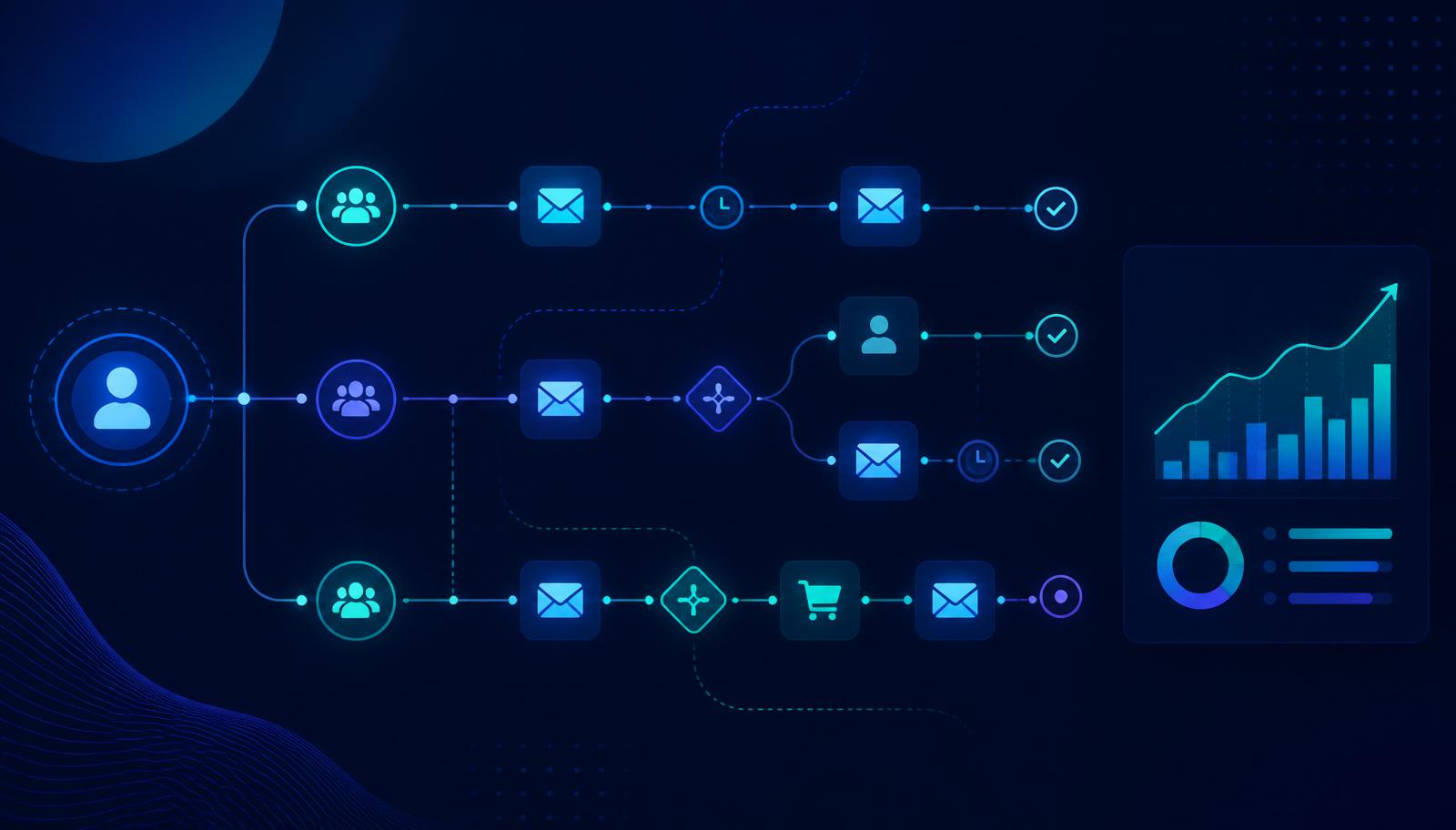
AI marketing automation platforms are becoming a major part of how businesses manage campaigns, nurture leads, personalize outreach, score prospects, organize customer data, and measure marketing performance.
For years, marketing automation depended on email sequences, CRM workflows, landing pages, lead forms, manual segmentation, campaign calendars, and reporting dashboards. Those systems are still important, but AI is changing how marketing teams plan, execute, and optimize their work.
AI can help businesses write campaign copy, segment audiences, identify customer behavior patterns, recommend next steps, personalize messaging, summarize results, and automate repetitive marketing tasks.
But choosing the right AI marketing automation platform is not just about finding the tool with the most automation features.
Some platforms are built for small businesses. Others are designed for B2B sales teams, e-commerce brands, agencies, enterprise marketing departments, SaaS companies, or customer lifecycle teams. Some focus heavily on email marketing. Others combine CRM, ads, content, lead scoring, website behavior, and customer data into a larger marketing system.
The best AI marketing automation platform is the one that fits the company''s audience, sales process, customer journey, data structure, team size, and growth goals.
Why Choosing the Right Marketing Automation Platform Matters
Marketing automation can either make a business more organized or more complicated.
When it works well, it helps companies communicate with the right people at the right time, follow up with leads, personalize messages, and understand which campaigns are producing results.
When it works poorly, it can create messy contact lists, irrelevant emails, confusing workflows, duplicated records, weak reporting, and customer messages that feel generic or poorly timed.
AI can improve marketing automation, but it can also amplify bad strategy. If a company does not understand its audience, customer journey, or offer, AI will not fix the problem by itself.
The right platform should help the business make better marketing decisions, not just send more messages.
Start With the Marketing Problem You Need to Solve
Before comparing platforms, businesses should identify the specific marketing problem they are trying to improve. Common goals include:
- Automating email follow-up
- Nurturing leads over time
- Improving customer segmentation
- Personalizing marketing messages
- Scoring leads more accurately
- Re-engaging inactive contacts
- Coordinating campaigns across channels
- Connecting marketing and sales teams
- Improving reporting
- Reducing manual campaign work
- Supporting customer onboarding
- Increasing repeat purchases
- Managing lifecycle marketing
- Understanding campaign performance
The key question is: what part of the marketing process needs to become more consistent, measurable, or personalized?
For one business, the issue may be slow lead follow-up. For another, it may be weak customer segmentation. For another, it may be that marketing and sales data are not connected.
The clearer the problem, the easier it becomes to choose the right platform.
Match the Platform to the Marketing Use Case
AI marketing automation platforms can support different stages of the customer journey. Understanding the use case helps narrow the options.
Lead Capture and Follow-Up
Some platforms help businesses capture leads through forms, landing pages, chat, ads, downloads, webinars, or website interactions.
AI can support faster follow-up, better lead routing, personalized messages, and smarter recommendations about which leads may deserve attention first.
This can be useful for service businesses, agencies, consultants, SaaS companies, and B2B teams that need to respond quickly when someone shows interest.
Email Marketing and Nurture Campaigns
Many marketing automation platforms focus on email campaigns and nurture sequences.
AI can help write subject lines, create message variations, personalize email content, recommend send times, and identify which contacts are most likely to engage.
Businesses should look for tools that allow human review and brand control. AI can make email creation faster, but the messaging still needs to sound like the company.
Customer Segmentation
Segmentation is one of the most valuable uses of marketing automation.
AI can help group contacts based on behavior, interests, purchase history, website activity, engagement, lifecycle stage, or predicted intent.
Better segmentation can lead to more relevant campaigns. Instead of sending the same message to everyone, businesses can tailor communication based on what the customer actually needs.
Lead Scoring and Sales Alignment
Some platforms use AI to help identify which leads are most likely to convert.
This can support sales teams by prioritizing follow-up and helping marketing understand which campaigns are attracting better prospects.
Lead scoring is most useful when the business has enough data and a clear definition of what makes a good lead. Without that foundation, scoring can become misleading.
E-Commerce and Customer Lifecycle Marketing
E-commerce businesses may use AI marketing automation for abandoned carts, product recommendations, post-purchase follow-up, win-back campaigns, loyalty programs, and personalized offers.
These tools often need to connect with Shopify, WooCommerce, payment systems, product catalogs, and customer purchase history.
For e-commerce brands, the best platform often depends on how well it can use customer behavior and purchase data.
Campaign Reporting and Optimization
AI can also help marketers understand campaign performance. Instead of manually reviewing every metric, marketing teams can use AI to summarize results, identify patterns, explain changes, and suggest next steps.
This can be useful for business owners and marketing leaders who need clearer answers about what is working and what needs attention.
Compare the Core Features
Once the use case is clear, businesses should compare the features that matter most. Important features may include:
- Email automation
- SMS or messaging automation
- Landing pages and forms
- CRM integration
- Contact segmentation
- Lead scoring
- AI content suggestions
- Campaign personalization
- Customer journey mapping
- Behavioral triggers
- A/B testing
- Reporting dashboards
- Sales pipeline support
- E-commerce integrations
- Ad platform integrations
- Website tracking
- Customer data management
- Workflow automation
- Team permissions
- Compliance and consent tools
The best platform is not always the one with the largest feature set. A small business may need simple email follow-up and contact organization. A B2B company may need lead scoring and sales handoff. An e-commerce brand may need product-based automation and lifecycle campaigns.
Look at Workflow Fit
Marketing automation only works if it fits the way the business actually operates.
Businesses should ask:
- Who will build and manage campaigns?
- Does the platform fit our current sales process?
- Can it connect with our CRM?
- Can we easily create and edit workflows?
- Does it support approvals?
- Can sales and marketing teams both use it?
- Does it fit our content calendar?
- Can it support multiple audiences or brands?
- Will the team actually use it?
A powerful platform can fail if it is too difficult for the team to manage. A simpler platform may produce better results if it is easier to adopt and maintain.
The goal is not just to automate marketing. The goal is to make marketing more consistent, organized, and effective.
Review Data Quality and Contact Management
Marketing automation depends heavily on data quality.
If contact records are messy, outdated, duplicated, or poorly segmented, automation can create bad customer experiences. People may receive irrelevant messages, duplicate emails, or content that does not match their stage in the customer journey.
Before choosing a platform, businesses should think about:
- Where contact data comes from
- How records are cleaned and updated
- Whether duplicate contacts can be managed
- How segments are created
- Whether contact behavior is tracked
- How consent and unsubscribe preferences are handled
- Whether customer data can be synced across systems
AI can help with segmentation and personalization, but it needs reliable data to work well.
Consider Personalization Without Losing Control
Personalization is one of the biggest promises of AI marketing automation.
A platform may help tailor emails, product recommendations, offers, subject lines, timing, or follow-up messages based on customer behavior.
That can be valuable, but businesses should still maintain control over brand voice, claims, offers, and customer experience. Important questions include:
- Can we review AI-generated content before it goes live?
- Can we set brand voice guidelines?
- Can we restrict certain claims or language?
- Can we approve major workflow changes?
- Can we see why a recommendation was made?
- Can we test personalization before sending?
AI should help marketing feel more relevant, not random or overly automated.
Check Integrations With Sales and Customer Systems
Marketing automation becomes more useful when it connects to the systems the business already uses.
Common integrations may include:
- Salesforce
- HubSpot
- Shopify
- WooCommerce
- Stripe
- Google Ads
- Meta Ads
- LinkedIn Ads
- Zapier
- Slack
- Calendly
- Webflow
- WordPress
- Customer support tools
- Analytics platforms
- Data warehouses
A platform that does not connect with the company''s CRM, website, e-commerce system, or sales tools may create more manual work.
The right integrations can help marketing teams understand the full customer journey, from first visit to lead, sale, renewal, or repeat purchase.
Review Privacy, Consent, and Compliance
Marketing automation involves customer and prospect data. That makes privacy and consent important.
Businesses should understand how the platform handles:
- Unsubscribes
- Consent records
- Email compliance
- Data storage
- User permissions
- Customer deletion requests
- Regional privacy requirements
- Sensitive customer information
- AI model training policies
This is especially important for companies operating in regulated industries, selling internationally, or managing large contact databases. A marketing automation platform should help businesses communicate responsibly, not create compliance problems.
Understand Pricing and Scale
AI marketing automation platforms can vary widely in cost. Some charge by contact count. Others charge by user, email volume, automation volume, feature tier, CRM seats, SMS usage, AI credits, or enterprise plan.
Before choosing a platform, businesses should ask:
- Is pricing based on contacts, users, sends, or features?
- Are AI features included or separate?
- What happens as the contact list grows?
- Are key integrations included?
- Are landing pages, forms, and reporting included?
- Is SMS priced separately?
- Are advanced workflows available only on higher plans?
- Is onboarding required?
- Can the platform grow with the business?
A platform that seems affordable with a small contact list may become expensive as the database grows. Businesses should look at current needs and future scale before committing.
Test With One Clear Campaign
A marketing automation platform should be tested with a real campaign before it becomes central to the business. A good pilot might include:
- A new lead welcome sequence
- An abandoned cart campaign
- A webinar follow-up sequence
- A customer onboarding workflow
- A re-engagement campaign
- A sales handoff workflow
- A newsletter segmentation test
- A post-purchase follow-up campaign
The test should answer practical questions:
- Was the workflow easy to build?
- Did the messages feel relevant?
- Did the platform save time?
- Did contacts move through the sequence correctly?
- Was reporting easy to understand?
- Did the team trust the automation?
- Could sales see the right information?
- Did the campaign produce measurable engagement?
Testing one focused campaign can reveal whether the platform fits the business better than a long feature comparison.
Common Mistakes to Avoid
One common mistake is choosing a marketing automation platform before mapping the customer journey. Another mistake is sending more messages without improving relevance. Automation should not mean overwhelming people with generic emails.
Businesses should also avoid relying too heavily on AI-generated copy without editing. The final message still needs to match the company''s voice, offer, and audience.
Other mistakes include:
- Importing messy contact data
- Ignoring consent and unsubscribe rules
- Creating too many workflows too quickly
- Not connecting marketing and sales data
- Choosing a platform that is too complex
- Failing to monitor campaign performance
- Not testing messages before sending
- Measuring success only by open rates
- Forgetting to update old automations
The best AI marketing automation platforms help businesses communicate more thoughtfully, not just more frequently.
How ProviderScout Helps Compare AI Marketing Automation Platforms
ProviderScout.ai helps businesses explore and compare AI providers by category, including AI Marketing Automation Platforms.
The AI Marketing Automation Platforms category can help users review providers, compare positioning, understand use cases, and identify companies that may fit different campaign, CRM, segmentation, email, and customer lifecycle needs.
Provider profiles, category organization, and Scout Score visibility are designed to make the discovery process easier.
Businesses can also use Scout, the ProviderScout AI discovery assistant, to ask practical questions about marketing automation tools, workflow needs, provider fit, and category differences.
Instead of starting with a broad search query or a generic software list, users can explore AI marketing automation providers in a more organized category environment.
Final Thoughts
Choosing the best AI marketing automation platform in 2026 starts with understanding the marketing process the business needs to improve.
Some companies need better lead follow-up. Others need email automation, segmentation, CRM alignment, customer lifecycle campaigns, e-commerce workflows, reporting, or campaign personalization.
The right platform should fit the company''s audience, data, workflow, team, and growth strategy. It should make marketing more organized, more relevant, and easier to measure.
As AI becomes more common in marketing, businesses will have more automation options. A clear evaluation process can help companies choose platforms that support stronger communication, better customer journeys, and more efficient marketing operations.
Build accurate target lists, enrich and score them, and reach the right contacts without turning outreach into spam.
Keep reading
- AI Education & Training ToolsPluralsight Introduces AI Learning Integrations and Skill Development Tools
- AI Cybersecurity ToolsSecuronix Introduces Agent Behavioral Analytics to Monitor Autonomous Systems
- AI Healthcare Technology ToolsGenie Health Secures Seed Capital to Expand AI-Driven Digital Healthcare Solutions
- AI Coding & Developer ToolsSimplismart In Talks for New Investment Round to Expand AI Infrastructure
- AI Research ToolsAlbert Invent Advances AI for Chemical Experimentation
- AI Cybersecurity ToolsSophos Introduces AI Defense for Real-Time Security and Shadow AI Detection