
How to Choose the Best AI Translation and Localization Tools in 2026
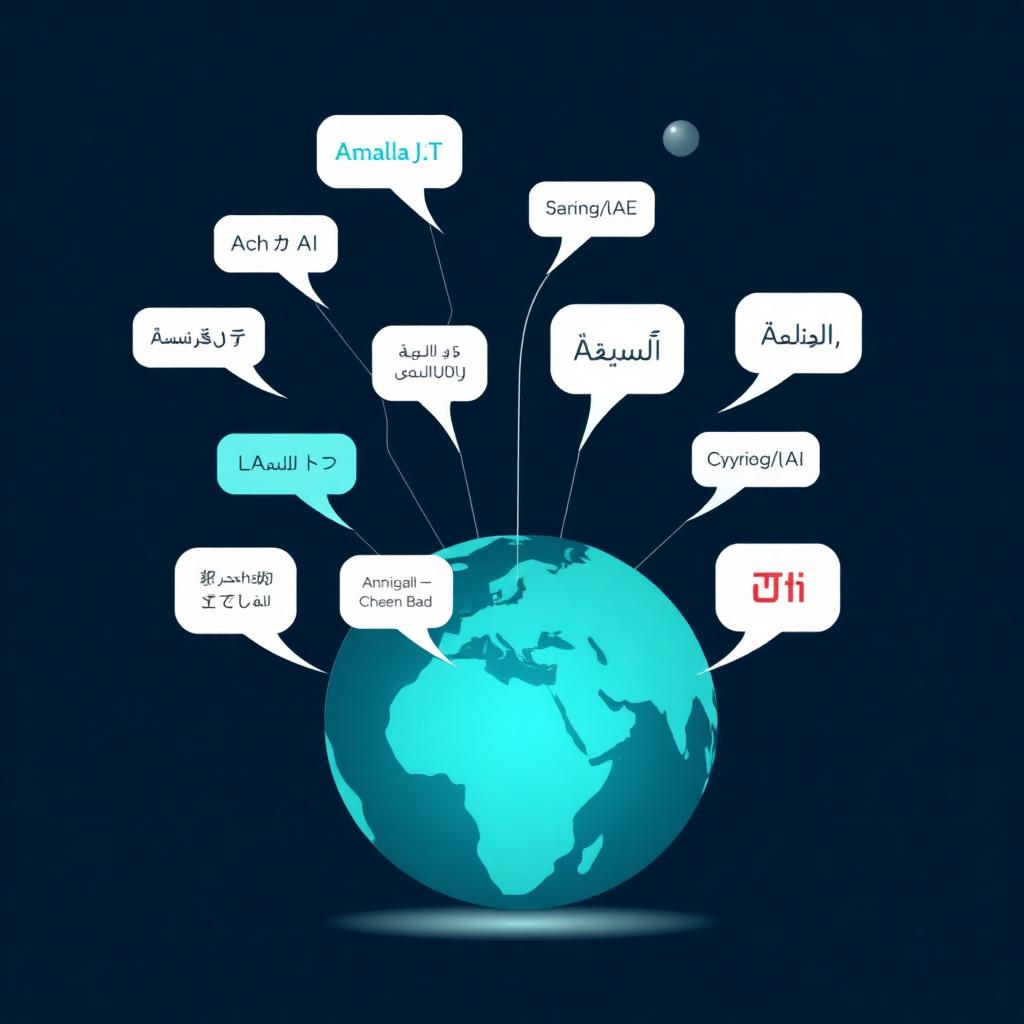
AI translation and localization tools are becoming more important as businesses serve customers, employees, partners, and markets across different languages.
For years, translation was handled through a mix of human translators, agencies, spreadsheets, manual review, and basic machine translation. That process could work, but it was often slow, expensive, and difficult to scale.
AI has changed what is possible. Businesses can now translate website content, product pages, support articles, training materials, marketing campaigns, documents, apps, subtitles, and customer communications much faster than before.
But choosing the right AI translation or localization tool is not just about finding the platform that can translate the most languages.
The best tool is the one that fits the company's content, audience, workflow, quality standards, compliance needs, and review process.
Why Choosing the Right Translation Tool Matters
Translation is not only about converting words from one language to another.
For businesses, translation affects brand trust, customer experience, sales, support, training, legal clarity, and market expansion. A poorly translated product page can reduce conversions. A confusing support article can frustrate customers. A bad legal or medical translation can create serious risk. A marketing campaign that ignores local language, tone, or culture can miss the audience completely.
That is why localization matters.
Translation focuses on language. Localization focuses on making content work for a specific market, region, audience, and cultural context.
A basic AI translation tool may be enough for simple internal communication. But a business expanding into new markets may need translation memory, glossary control, human review, workflow management, brand voice settings, and localization support.
The right tool should help the company communicate clearly, accurately, and appropriately across languages.
Start With the Content You Need to Translate
Before comparing AI translation platforms, businesses should identify what they actually need translated.
Common content types include:
- Website pages
- Product descriptions
- E-commerce listings
- Help center articles
- Customer support messages
- Training materials
- Legal documents
- Marketing campaigns
- Mobile app text
- Software interface copy
- Video subtitles
- Sales materials
- Internal documents
- Knowledge base content
Each content type has different requirements.
A tool that works well for short customer support replies may not be the best choice for legal agreements. A platform that translates product pages may not be enough for a software company that needs app localization. A tool that creates fast draft translations may still need human review for public-facing content.
The first question should be:
What content matters most to translate accurately and consistently?
That answer will narrow the field quickly.
Decide Whether You Need Translation or Full Localization
Some businesses only need translation. Others need full localization.
Translation may be enough when the goal is to understand or communicate basic information across languages. This can include internal notes, simple support messages, or draft versions of documents.
Localization becomes more important when content is public-facing, brand-sensitive, or market-specific.
Localization may include:
- Adjusting tone for a region
- Adapting examples or references
- Changing measurements, currencies, dates, or formats
- Matching local search behavior
- Maintaining brand voice across languages
- Reviewing cultural fit
- Adapting website or app copy for different markets
- Supporting region-specific compliance or terminology
A company entering a new market should not choose a tool based only on word-for-word translation quality. It should look for a platform that helps the content feel natural and useful to the target audience.
Compare Language Coverage and Quality
Language coverage is one of the most obvious things to compare, but it should not be the only factor.
Some tools support many languages but perform better in certain language pairs than others. A business that needs English to Spanish may have different options than a business that needs Japanese, Arabic, German, Korean, Portuguese, or multiple regional variations.
Businesses should ask:
- Which languages do we need now?
- Which languages might we need later?
- Does the tool support regional variations?
- Does it handle formal and informal tone?
- How well does it perform with industry-specific vocabulary?
- Can we test the output before committing?
Quality can vary by language, content type, and subject matter. A good evaluation should include real examples from the company's own content.
Look for Glossary and Terminology Control
For many businesses, consistency is just as important as speed.
A company may have product names, industry terms, service names, slogans, legal phrases, technical language, or brand-specific words that need to be translated consistently.
That is where glossary and terminology features matter.
A strong AI translation tool should allow businesses to define preferred terms, approved phrases, words that should not be translated, and terminology rules for different languages.
This is especially important for:
- Software companies
- Healthcare businesses
- Financial services firms
- Legal teams
- E-commerce brands
- Manufacturers
- Education companies
- Technical support teams
- Companies with branded products or services
Without terminology control, translated content can become inconsistent across pages, documents, campaigns, and support materials.
Evaluate Human Review Options
AI translation can make the process faster, but many businesses still need human review.
The level of review depends on the use case.
Internal drafts may not need much review. Public website copy usually needs more. Legal, medical, financial, or technical content may require expert review before publication.
Businesses should look for tools that support:
- Human editing
- Reviewer roles
- Approval workflows
- Comments and suggestions
- Version history
- Translation memory
- Quality checks
- Side-by-side review
- Collaboration between teams
A good AI translation workflow should make human review easier, not remove it entirely.
The best systems often combine AI speed with human judgment.
Consider Workflow and Integrations
Translation becomes much more useful when it fits into the company's existing workflow.
A business should ask:
- Does the tool connect to our website platform?
- Does it support our CMS?
- Can it work with Shopify, WordPress, Webflow, HubSpot, or other platforms?
- Does it support software localization files?
- Can it integrate with customer support tools?
- Does it connect with project management or content workflows?
- Can developers use an API?
- Can translated content be published easily?
A tool that translates text well but requires too much copying and pasting may not save much time.
For companies with frequent content updates, integration may be one of the most important factors.
Review SEO and International Search Needs
Translation and localization can affect search visibility.
A business translating website content should think about international SEO, not just language conversion.
Important questions include:
- Does the tool support localized metadata?
- Can page titles and descriptions be translated properly?
- Does it support hreflang or international SEO structure?
- Can URLs be localized?
- Does it help adapt keywords for different languages?
- Does translated content remain indexable?
- Can local search intent be considered?
A direct translation of an English keyword may not match how people search in another language. Good localization should consider how real users describe problems, products, and services in their own market.
For businesses using translation to reach new customers, SEO support can make a major difference.
Check Security, Privacy, and Data Handling
Translation tools may process sensitive content.
This can include contracts, employee information, customer support messages, financial documents, healthcare records, intellectual property, product plans, or internal business communications.
Before choosing a platform, businesses should understand:
- What data is uploaded
- Where the data is stored
- Whether translated content is used for model training
- What security controls are available
- Whether the tool supports user permissions
- Whether content can be deleted
- Whether the platform fits industry compliance needs
This is especially important for legal, healthcare, finance, enterprise, government-related, and HR use cases.
A business should never assume that all translation tools handle data the same way.
Understand Pricing and Scale
AI translation and localization tools can be priced in different ways.
Some charge by word count. Others charge by character volume, seat, project, language, usage, API call, or subscription tier. Enterprise tools may require custom pricing based on workflow and volume.
Before choosing a platform, businesses should ask:
- Is pricing based on words, characters, users, or usage?
- Are all languages included?
- Are glossary features included?
- Are integrations included?
- Does human review cost extra?
- Is API access included?
- What happens as translation volume grows?
- Are there limits on projects, languages, or collaborators?
A low-cost tool may work well for occasional translation. A larger localization platform may make sense for businesses translating content regularly across multiple markets.
The right choice depends on volume, complexity, quality expectations, and internal resources.
Test With Real Content
A translation demo can be helpful, but businesses should test tools with real content before making a decision.
Test samples should include:
- Simple copy
- Technical language
- Brand-sensitive copy
- Support content
- Product descriptions
- Long-form content
- Content with industry terminology
- Content that includes formatting, tables, or links
- Content that may require cultural adaptation
The test should answer practical questions:
- Is the translation accurate?
- Does it sound natural?
- Does the tone fit the audience?
- Are important terms translated consistently?
- Does formatting remain intact?
- Is the review process easy?
- Can the content be published or exported cleanly?
A tool that performs well on generic sample text may struggle with real business content.
Common Mistakes to Avoid
One common mistake is choosing a translation tool based only on the number of languages supported.
Another mistake is treating localization as a simple word-for-word process. Public-facing content often needs more than direct translation.
Businesses should also avoid skipping human review for high-stakes content. AI can produce strong results, but accuracy and tone still matter.
Other mistakes include:
- Ignoring terminology control
- Not testing real content
- Overlooking integrations
- Forgetting about international SEO
- Using the same workflow for every content type
- Not defining approval responsibilities
- Choosing a tool without understanding data handling
- Assuming translation quality is equal across all languages
The best AI translation tool should help a business communicate more clearly, not just more quickly.
How ProviderScout Helps Compare AI Translation and Localization Tools
ProviderScout.ai helps businesses explore and compare AI providers by category, including AI Translation & Localization Tools.
The AI Translation & Localization Tools category can help users review providers, compare positioning, understand use cases, and identify companies that may fit different language, localization, and international content needs.
Provider profiles, category organization, and Scout Score visibility are designed to make the discovery process easier.
Businesses can also use Scout, the ProviderScout AI discovery assistant, to ask practical questions about translation needs, localization workflows, provider fit, and category differences.
Instead of starting with a broad search engine query or a generic list of translation platforms, users can explore AI translation and localization providers in a more organized category environment.
Final Thoughts
Choosing the best AI translation and localization tool in 2026 starts with understanding the content, audience, and market the business needs to support.
Some companies need fast internal translation. Others need multilingual websites, software localization, international SEO, customer support translation, or high-quality market-specific content.
The right tool should match the content type, support the required languages, fit the workflow, protect sensitive information, and allow the right level of human review.
As businesses communicate across more markets and languages, AI translation tools will become increasingly valuable. A clear evaluation process can help companies choose platforms that improve speed, consistency, quality, and global communication.
Keep reading
- AI Education & Training ToolsPluralsight Introduces AI Learning Integrations and Skill Development Tools
- AI Cybersecurity ToolsSecuronix Introduces Agent Behavioral Analytics to Monitor Autonomous Systems
- AI Healthcare Technology ToolsGenie Health Secures Seed Capital to Expand AI-Driven Digital Healthcare Solutions
- AI Coding & Developer ToolsSimplismart In Talks for New Investment Round to Expand AI Infrastructure
- AI Research ToolsAlbert Invent Advances AI for Chemical Experimentation
- AI Cybersecurity ToolsSophos Introduces AI Defense for Real-Time Security and Shadow AI Detection