
AI Advertising Tools in 2026: How Businesses Are Creating and Optimizing Campaigns Faster
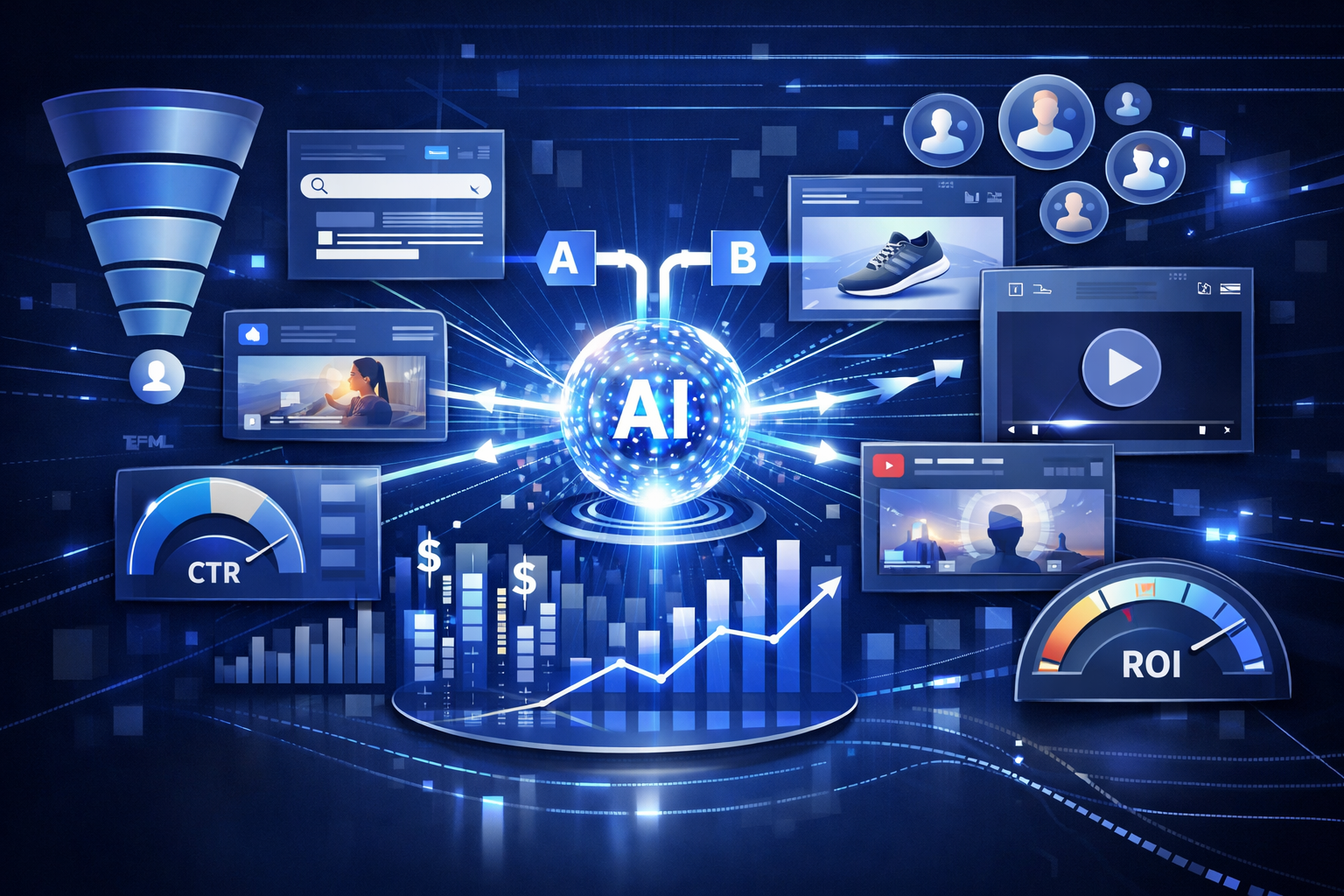
Advertising has always been one of the fastest ways for businesses to reach customers. Companies use ads to build awareness, generate leads, sell products, promote offers, launch brands, retarget visitors, and compete in crowded markets.
But advertising has become more complex.
Businesses need to create more ad variations, manage more platforms, analyze more data, test more creative, adjust budgets, monitor performance, and understand which campaigns are actually driving results. Costs can rise quickly when targeting, messaging, creative, or landing pages are not working.
AI advertising tools are changing that.
Instead of relying only on manual campaign setup, static ad copy, traditional audience targeting, and spreadsheet-based reporting, businesses can now use AI to generate ad creative, write copy, test variations, optimize bids, analyze performance, recommend budget shifts, and personalize campaigns across channels.
These tools are not replacing marketing strategy, brand judgment, creative direction, or media planning. Successful advertising still requires clear positioning, strong offers, audience understanding, and disciplined measurement. But AI is changing how businesses create, manage, and improve paid campaigns.
For companies that need more efficient ad production, better testing, and stronger campaign optimization, AI advertising tools have become one of the most practical applications of artificial intelligence.
What AI Advertising Tools Do
AI advertising tools help businesses create, manage, test, and optimize paid marketing campaigns using artificial intelligence.
At a basic level, these platforms can help generate ad copy, create visual concepts, suggest audiences, analyze campaign performance, and recommend changes. A business might use AI to create several headline variations, test different calls to action, identify weak-performing ads, or summarize which campaigns deserve more budget.
Many AI advertising platforms include features such as:
- Ad copy generation
- Headline testing
- Creative variation generation
- Image and video ad creation
- Audience targeting support
- Campaign performance analysis
- Budget optimization
- Bid optimization
- A/B testing support
- Landing page recommendations
- Retargeting support
- Paid search optimization
- Paid social optimization
- Display ad support
- Product ad optimization
- Campaign reporting
- Conversion tracking analysis
- Customer segmentation
- Creative fatigue detection
- Cross-channel advertising insights
The strongest platforms are not just copy generators. They are campaign optimization systems. They help businesses produce more creative options, test more effectively, and understand where ad dollars are working.
For example, an e-commerce company might use AI to create product ad variations and optimize shopping campaigns. A B2B company might use AI to write LinkedIn ad copy for different buyer personas. A local service business might use AI to improve paid search campaigns. A marketing agency might use AI to analyze campaign performance across many clients. A SaaS company might use AI to test landing page messaging and retargeting ads.
The real value is not simply that AI can write ads. The value is that businesses can create, test, and optimize paid campaigns more efficiently.
How Advertising Work Used to Be Managed Before AI
Before the rise of AI advertising tools, campaign management required a lot of manual planning and review.
Marketing teams would choose platforms, define audiences, write ad copy, create visuals, build landing pages, set budgets, launch campaigns, watch performance, and make adjustments over time. If performance dropped, they would review metrics, compare ads, and decide what to change.
Software helped, but it did not fully solve the problem.
Businesses used ad platforms, analytics tools, spreadsheets, creative tools, landing page builders, reporting dashboards, and attribution systems. These platforms made advertising possible, but they still required constant hands-on management.
Someone still had to write every headline. Someone still had to create every variation. Someone still had to analyze performance. Someone still had to spot creative fatigue. Someone still had to adjust budgets. Someone still had to decide what to test next.
That meant advertising teams could struggle to keep up with the pace of testing and optimization.
The AI revolution changed the workflow. Instead of creating and analyzing every variation manually, businesses can now use AI to support campaign generation, testing, and performance review.
What Changed With AI Advertising
The biggest change is that AI advertising tools make testing and optimization more scalable.
A business can now create multiple ad variations quickly, adapt copy for different audiences, generate visual concepts, summarize campaign performance, and identify opportunities to improve results.
That creates several important shifts.
First, creative production becomes faster. AI can help generate headlines, descriptions, visuals, scripts, and campaign concepts.
Second, testing becomes more practical. Teams can create more variations and learn which messages work best.
Third, optimization becomes more responsive. AI can help identify underperforming campaigns, budget inefficiencies, creative fatigue, and audience patterns.
Fourth, personalization becomes easier. Ads can be adapted for different buyer types, industries, locations, customer stages, or product interests.
This is why AI advertising tools are especially useful for e-commerce brands, SaaS companies, local businesses, agencies, direct-to-consumer brands, marketplaces, and companies managing campaigns across several platforms.
Practical Business Advantages
AI advertising tools offer several practical advantages for businesses.
Faster Ad Creation
The most obvious benefit is speed.
AI can help teams create headlines, descriptions, calls to action, visual concepts, and campaign variations faster than starting from scratch. This is especially valuable when a business needs to test multiple messages or promote several products.
The best use of AI is not to publish generic ads. It is to create more options that marketers can review, refine, and test.
More Creative Testing
Advertising performance often depends on testing.
Different headlines, offers, images, videos, audiences, and landing pages can produce very different results. AI tools make it easier to generate and compare variations.
More testing can lead to better campaign learning and better use of ad spend.
Better Performance Analysis
Ad platforms provide a lot of data, but it can be difficult to interpret quickly.
AI tools can summarize performance, identify weak spots, compare campaigns, and suggest possible next steps. This helps teams understand what is working and what may need adjustment.
Improved Budget Efficiency
Advertising budgets can be wasted when campaigns continue running after performance declines.
AI tools can help identify where budget may be better allocated, which campaigns are underperforming, and where conversion quality may be stronger.
This can help businesses spend more carefully.
Stronger Personalization
AI can help create different versions of ads for different audience segments.
A business might use different messaging for executives, small business owners, enterprise buyers, returning customers, or first-time visitors. This can make campaigns more relevant and improve response rates.
Better Cross-Channel Coordination
Many businesses advertise across search, social, display, video, marketplaces, and retargeting channels.
AI tools can help summarize performance across platforms and identify how different channels contribute to results. This helps businesses manage campaigns more strategically.
Common Use Cases for AI Advertising Tools
AI advertising tools are being used across many paid marketing functions.
Common use cases include:
- Paid search ad copy
- Paid social ad copy
- Display ad creative
- Video ad scripts
- Product ads
- Shopping campaign optimization
- Landing page recommendations
- Audience segmentation
- Retargeting campaigns
- A/B testing
- Creative variation generation
- Campaign performance summaries
- Budget recommendations
- Bid optimization
- Conversion analysis
- Ad fatigue detection
- Competitive ad research
- Local advertising campaigns
- Lead generation campaigns
- Cross-channel reporting
The best use cases are usually creative-heavy, testing-heavy, or data-heavy. If a business spends money on paid advertising, AI tools can help improve the way campaigns are created and managed.
What Businesses Should Look For in an AI Advertising Platform
Not all AI advertising tools are the same. Some focus on ad copy. Others focus on campaign optimization, media buying, creative testing, paid search, paid social, e-commerce ads, or analytics.
When comparing providers, businesses should look at:
- Supported ad platforms
- Ad copy quality
- Creative generation features
- Campaign optimization tools
- Budget recommendations
- A/B testing support
- Audience targeting features
- Conversion tracking support
- Reporting dashboards
- Cross-channel analytics
- Landing page analysis
- Brand voice controls
- Approval workflows
- Team permissions
- Data privacy controls
- Integration with analytics tools
- E-commerce integrations
- Pricing structure
- Agency or enterprise support
Businesses should also consider brand safety and compliance. Ads are public, and inaccurate or exaggerated claims can create trust and legal problems.
Where AI Advertising Fits in the Future of Paid Marketing
AI advertising tools are becoming part of the modern paid media stack.
In 2026, businesses are likely to use AI across campaign creation, creative testing, audience segmentation, performance analysis, budget optimization, and reporting. Paid advertising will continue to depend on strategy, but AI will help teams execute and learn faster.
The companies that benefit most will not be the ones that let AI run campaigns without oversight. They will be the ones that use AI to improve speed, testing, and decision-making.
They will use AI to generate more creative options. They will use AI to test messages faster. They will use AI to analyze performance more clearly. They will use AI to shift budgets more intelligently. They will use AI to make paid campaigns more relevant to each audience.
That is where the real business value is.
Final Thoughts
AI advertising tools are helping businesses move beyond the old limits of manual campaign creation and slow optimization. They make it easier to create ads, test variations, analyze performance, and improve budget efficiency across paid channels.
The value is not just faster ad copy. The value is better campaign execution.
Businesses need to reach the right audience. They need to create strong offers. They need to test creative ideas. They need to control ad spend. They need to understand what drives conversions. They need to improve performance without wasting budget.
AI advertising platforms help make that possible.
That is why this category has become one of the most important areas of practical AI adoption for paid marketing, e-commerce, lead generation, and growth teams.
Keep reading
- AI Education & Training ToolsPluralsight Introduces AI Learning Integrations and Skill Development Tools
- AI Cybersecurity ToolsSecuronix Introduces Agent Behavioral Analytics to Monitor Autonomous Systems
- AI Healthcare Technology ToolsGenie Health Secures Seed Capital to Expand AI-Driven Digital Healthcare Solutions
- AI Coding & Developer ToolsSimplismart In Talks for New Investment Round to Expand AI Infrastructure
- AI Research ToolsAlbert Invent Advances AI for Chemical Experimentation
- AI Cybersecurity ToolsSophos Introduces AI Defense for Real-Time Security and Shadow AI Detection