
AI Translation and Localization Tools in 2026: How Businesses Are Communicating Across Languages More Efficiently
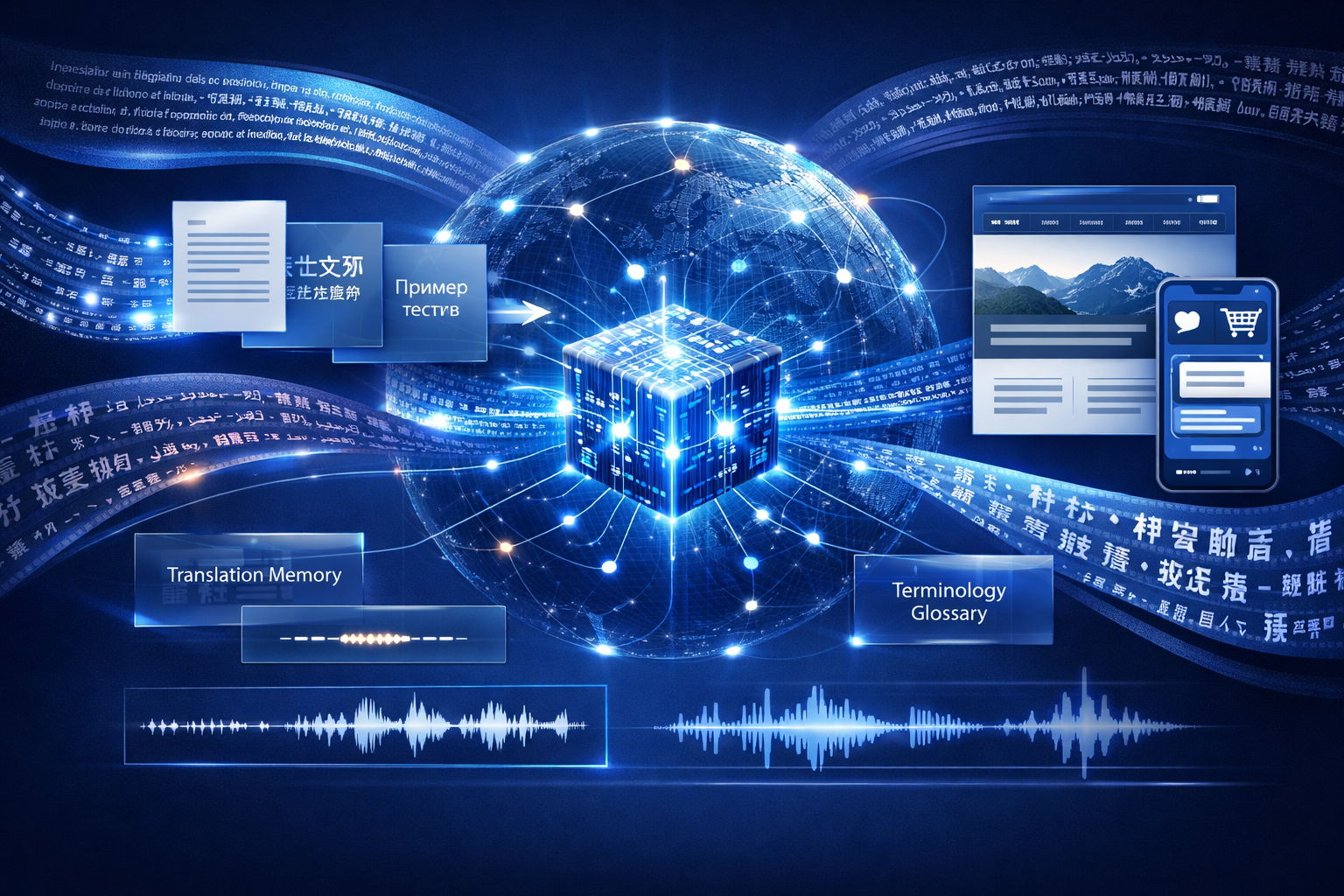
Language has always been one of the biggest challenges in global business. Companies need to communicate with customers, employees, partners, vendors, and audiences across different countries, cultures, and markets.
But translation and localization have traditionally been slow and expensive.
A business might need website pages translated, product documentation localized, customer support articles rewritten, training materials adapted, marketing campaigns adjusted, and videos dubbed for different regions. Direct translation is only part of the work. The message also has to make sense culturally, legally, and commercially.
AI translation and localization tools are changing that.
Instead of relying only on manual translation workflows, traditional translation management systems, and one-language-at-a-time production, businesses can now use AI to translate text, localize content, adapt tone, generate multilingual support materials, dub videos, translate documents, and scale communication across markets.
These tools are not replacing professional translators or localization experts. Human review is still critical for legal, medical, technical, brand-sensitive, and culturally nuanced content. But AI is changing how businesses produce and manage multilingual communication.
For companies that need to reach more audiences, support more languages, and reduce localization bottlenecks, AI translation and localization tools have become one of the most practical applications of artificial intelligence.
What AI Translation and Localization Tools Do
AI translation and localization tools help businesses translate, adapt, and manage content across languages using artificial intelligence.
At a basic level, these platforms can translate text from one language to another. A user can upload website copy, support articles, product descriptions, training materials, documents, subtitles, or marketing content and receive translated output.
But the strongest AI localization platforms go beyond simple translation.
Many include features such as:
- Text translation
- Document translation
- Website localization
- App localization
- Product content localization
- Marketing copy adaptation
- Tone and style control
- Translation memory
- Glossary management
- Brand terminology controls
- Subtitle translation
- Video dubbing
- Multilingual voice generation
- Customer support localization
- Real-time translation
- Multilingual chatbots
- Quality checks
- Human review workflows
- Localization project management
- Cultural adaptation support
The strongest platforms are not just translation engines. They are multilingual content systems. They help businesses manage language at scale while maintaining consistency and quality.
For example, a SaaS company might localize its product interface and help center. An e-commerce brand might translate product descriptions for different markets. A training team might create multilingual onboarding materials. A marketing team might adapt campaign copy for international audiences. A customer support team might use AI to respond to customers in multiple languages.
The real value is not simply that AI can translate words. The value is that businesses can communicate across languages faster and more consistently.
How Translation and Localization Worked Before AI
Before the rise of AI translation and localization tools, multilingual content usually required a more manual process.
A company would create content in one language, send it to translators or localization vendors, review the translated version, make edits, format the content, publish it, and repeat the process for each language or region.
For important content, this process still makes sense. High-stakes legal documents, regulated materials, brand campaigns, and technical content often require expert review.
But many businesses also need large volumes of everyday content translated quickly. Support articles, product updates, internal communications, training materials, and website pages can create constant localization demand.
Software helped, but it did not fully solve the problem.
Businesses used translation management systems, glossaries, spreadsheets, localization platforms, content management systems, subtitle tools, and vendor workflows. These tools helped organize translation work, but they still required significant manual effort.
Someone still had to translate the text. Someone still had to adapt the tone. Someone still had to maintain terminology. Someone still had to review every language version. Someone still had to update translations when the original content changed.
That meant localization could become a bottleneck for global growth.
The AI revolution changed the workflow. Instead of treating every translation as a separate manual project, businesses can now generate, adapt, and update multilingual content much faster.
What Changed With AI Translation and Localization
The biggest change is that AI makes multilingual content more scalable.
A business can now translate a large amount of content quickly, then use human review where it matters most. AI can also help preserve brand terminology, adjust tone, and create localized variations for different audiences.
That creates several important shifts.
First, translation becomes faster. Teams can generate first drafts of multilingual content quickly.
Second, localization becomes more practical. Businesses can adapt content for different markets without starting from scratch.
Third, updates become easier. When the original content changes, AI can help update translated versions more efficiently.
Fourth, multilingual support becomes more accessible. Companies can serve customers and employees in more languages without building large language teams from the start.
This is why AI translation and localization tools are especially useful for global companies, SaaS platforms, e-commerce brands, healthcare organizations, education providers, customer support teams, and businesses expanding into new markets.
Practical Business Advantages
AI translation and localization tools offer several practical advantages for businesses.
Faster Global Content Production
The most obvious benefit is speed.
AI tools can translate and adapt content much faster than traditional manual-only workflows. This helps businesses launch multilingual websites, support centers, product pages, and training materials more quickly.
Faster localization can support faster expansion into new markets.
Lower Localization Costs
Traditional translation can be expensive, especially when a business needs many languages or frequent updates.
AI can reduce costs by creating first drafts, handling routine content, and allowing human translators to focus on review, nuance, and high-value material.
This can make multilingual communication practical for smaller businesses.
More Consistent Terminology
Consistency matters in translation.
Product names, feature labels, technical terms, legal phrases, and brand language should be used consistently across languages. AI localization tools with glossaries and terminology controls can help maintain consistency.
This is especially important for software, healthcare, finance, legal, and technical companies.
Better Customer Support Across Languages
Customers often prefer support in their own language.
AI translation tools can help support teams translate tickets, chat conversations, help center articles, and responses. This allows businesses to serve more customers without requiring every support agent to speak every language.
Human escalation and review are still important for sensitive or complex issues.
Easier Training and Internal Communication
Global teams need clear internal communication.
AI translation tools can help localize employee training, onboarding materials, policy updates, safety instructions, and company announcements.
This can improve understanding and consistency across distributed organizations.
Better Multilingual Marketing
Marketing content usually needs more than direct translation.
AI localization tools can help adapt tone, wording, and messaging for different markets. A campaign may need to sound natural, culturally appropriate, and relevant to the audience.
Human review remains important, but AI can speed up the creative adaptation process.
Common Use Cases for AI Translation and Localization Tools
AI translation and localization tools are being used across many business functions.
Common use cases include:
- Website translation
- App localization
- Product descriptions
- Help center articles
- Customer support tickets
- Chat translation
- Training materials
- Employee communications
- Marketing campaigns
- Email localization
- Document translation
- Subtitle translation
- Video dubbing
- E-learning localization
- Technical documentation
- Legal document first drafts
- Healthcare communication support
- Multilingual chatbot support
- Global sales materials
- International SEO content
The best use cases are usually content-heavy and repeatable. If a business regularly creates content that needs to reach different language audiences, AI translation tools can make that work more efficient.
What Businesses Should Look For in an AI Translation or Localization Platform
Not all AI translation tools are the same. Some focus on simple translation. Others focus on localization workflows, enterprise terminology, software localization, video dubbing, customer support, or multilingual marketing.
When comparing providers, businesses should look at:
- Translation quality
- Supported languages
- Localization workflow features
- Glossary management
- Brand terminology controls
- Translation memory
- Human review workflows
- Document support
- Website and app integration
- Subtitle and dubbing features
- Real-time translation
- Customer support integration
- Data privacy controls
- Security features
- Team permissions
- Quality assurance tools
- Cultural adaptation support
- Pricing structure
- Enterprise support
Businesses should also be careful with sensitive content. Legal, medical, financial, technical, and brand-critical materials should receive human review before publication.
Where AI Translation and Localization Fits in the Future of Global Business
AI translation and localization tools are becoming part of the global business operating stack.
In 2026, businesses are likely to use AI to translate websites, localize products, support customers, train employees, and adapt campaigns across languages. Human translators and localization experts will still play an important role, especially where accuracy, nuance, and cultural understanding matter.
The companies that benefit most will not be the ones that treat translation as a simple word conversion. They will be the ones that use AI to make multilingual communication faster while preserving quality.
They will use AI to translate routine content faster. They will use AI to maintain terminology consistency. They will use AI to support global customers. They will use AI to localize training and documentation. They will use AI to help human reviewers focus on nuance and quality.
That is where the real business value is.
Final Thoughts
AI translation and localization tools are helping businesses move beyond the old limits of slow, expensive, one-language-at-a-time workflows. They make it easier to translate content, adapt messaging, support customers, and communicate across global teams.
The value is not just translation. The value is broader communication.
Businesses need to reach new markets. They need to support customers in different languages. They need to train global teams. They need to keep product language consistent. They need to update multilingual content quickly. They need to communicate clearly across cultures.
AI translation and localization platforms help make that possible.
That is why this category has become one of the most important areas of practical AI adoption for global businesses.
Keep reading
- AI Education & Training ToolsPluralsight Introduces AI Learning Integrations and Skill Development Tools
- AI Cybersecurity ToolsSecuronix Introduces Agent Behavioral Analytics to Monitor Autonomous Systems
- AI Healthcare Technology ToolsGenie Health Secures Seed Capital to Expand AI-Driven Digital Healthcare Solutions
- AI Coding & Developer ToolsSimplismart In Talks for New Investment Round to Expand AI Infrastructure
- AI Research ToolsAlbert Invent Advances AI for Chemical Experimentation
- AI Cybersecurity ToolsSophos Introduces AI Defense for Real-Time Security and Shadow AI Detection