
AI Chatbots and Customer Support Tools in 2026: How Businesses Are Delivering Faster Answers and Better Service
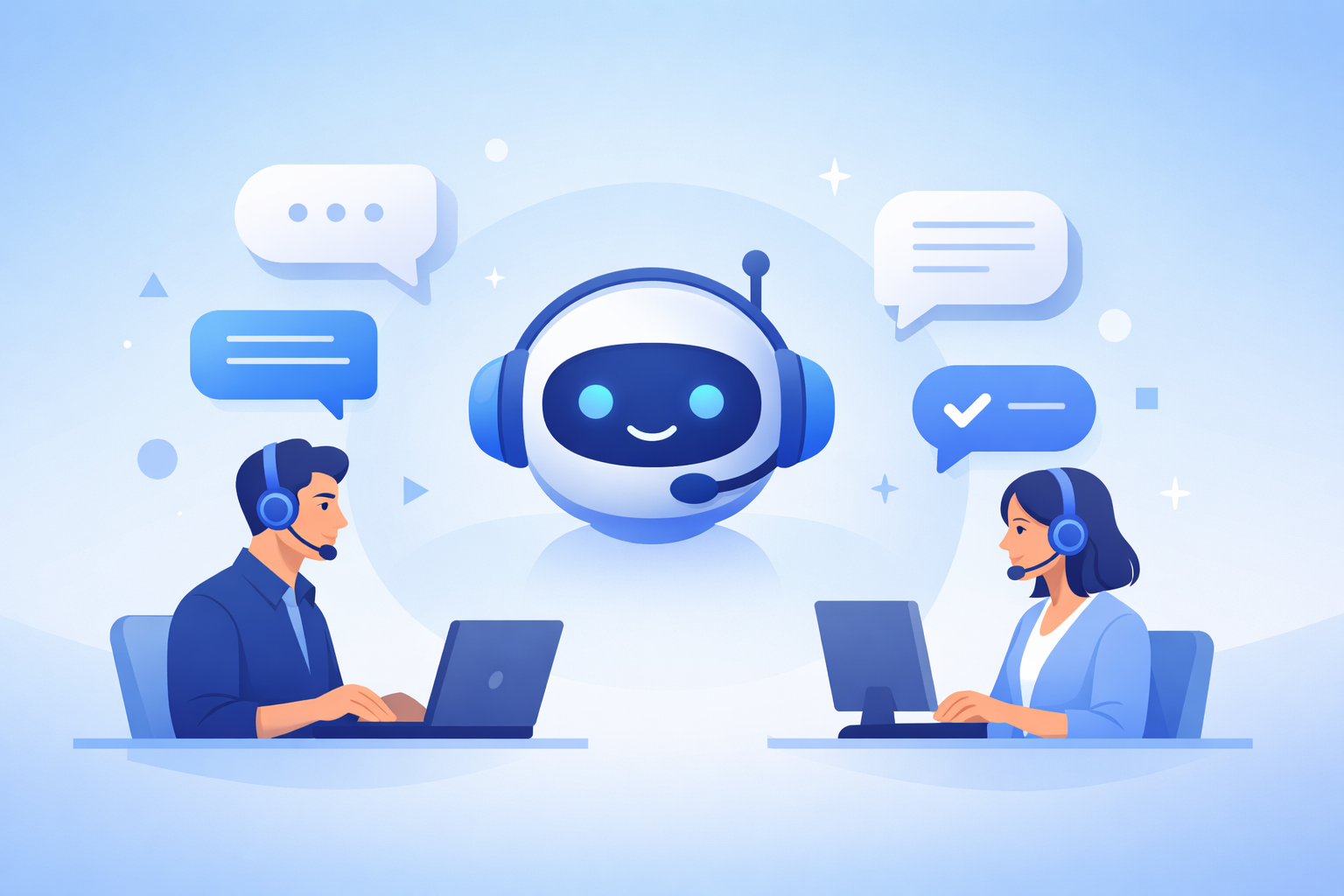
Customer support has always been one of the most important parts of a business. Customers need answers before they buy, after they buy, when something goes wrong, and when they are trying to get more value from a product or service.
But support has also always been difficult to scale.
Customers expect fast responses. Support teams are often stretched thin. Help centers can be hard to search. Live agents can only handle so many conversations at once. And as businesses grow across channels, time zones, products, and customer segments, the pressure on support teams keeps increasing.
AI chatbots and customer support tools are changing that.
Instead of relying only on human agents, static help centers, and manual ticket routing, businesses can now use AI to answer common questions, guide users through issues, summarize conversations, route tickets, support agents, and deliver faster service across multiple channels.
These tools are not replacing human customer service. The best support still requires empathy, judgment, escalation, and human problem-solving. But AI is changing how businesses handle routine questions, organize support workflows, and help customers get answers faster.
For companies that want to improve response times, reduce support volume, and create a better customer experience, AI chatbots and customer support tools have become one of the most practical uses of artificial intelligence.
What AI Chatbots and Customer Support Tools Do
AI chatbots and customer support tools help businesses communicate with customers, answer questions, resolve common issues, and support human agents.
At a basic level, these tools allow customers to ask questions in natural language and receive helpful responses. A customer might ask about pricing, account access, order status, product features, troubleshooting steps, return policies, or appointment availability. The AI system can respond based on approved knowledge sources, website content, support documents, FAQs, or connected business systems.
Many AI customer support platforms include features such as:
- Website chatbots
- AI-powered help center search
- Ticket routing
- Automated answers
- Conversation summaries
- Agent assist tools
- Suggested replies
- Customer intent detection
- Multilingual support
- Order and account lookup
- Escalation to human agents
- Chat history and context
- Voice support integration
- CRM integration
- Support analytics
- Knowledge base management
- Omnichannel messaging
- Workflow automation
- Customer satisfaction tracking
The strongest platforms are not just simple chat widgets. They are customer support systems that combine AI answers, human escalation, ticket management, knowledge retrieval, and service workflows.
For example, an e-commerce company might use an AI chatbot to answer questions about shipping, returns, and product availability. A software company might use AI to help customers troubleshoot product issues. A healthcare technology company might use AI to route support requests to the correct team. A professional services firm might use AI to answer basic intake questions before a human representative follows up.
The real value is not simply that customers can chat with AI. The value is that customers can get faster, more useful answers while support teams spend more time on the issues that truly need human attention.
How Customer Support Used to Work Before AI
Before the rise of AI chatbots and customer support tools, most customer service followed a more manual process.
A customer would call, email, submit a form, open a ticket, or search a help center. If they contacted support directly, a human agent would read the message, identify the problem, search for the right answer, respond to the customer, and escalate the issue if needed.
For simple questions, this process could be inefficient. Customers often had to wait for answers to issues that were already documented somewhere. Support agents had to answer the same questions repeatedly. Managers had to manually review tickets, monitor response times, and identify recurring problems.
Software helped, but it did not fully solve the problem.
Businesses used help desk platforms, knowledge bases, live chat tools, email systems, phone systems, CRM platforms, ticketing systems, and FAQ pages. These tools helped organize support, but they still required a lot of manual effort.
Someone still had to read the ticket. Someone still had to search the knowledge base. Someone still had to write the response. Someone still had to decide where the issue should go. Someone still had to summarize the customer history.
That meant support teams could become overloaded as ticket volume increased.
The AI revolution changed the workflow. Instead of having every support request start with a human agent, many requests can now begin with AI-assisted answers, automated triage, or agent support. Human agents remain essential, but AI helps reduce the repetitive work around them.
What Changed With AI Customer Support
The biggest change is that AI customer support tools make it easier to provide immediate help.
A customer can ask a question and receive an answer right away, even outside normal business hours. If the issue is simple, the AI may resolve it. If the issue is complex, the AI can collect context and route the conversation to the right person.
That creates several important shifts.
First, support becomes faster. Customers do not have to wait as long for basic answers.
Second, support becomes more scalable. A business can handle more questions without increasing the support team at the same rate.
Third, human agents become more productive. AI can summarize conversations, suggest replies, surface relevant help articles, and reduce repetitive work.
Fourth, support knowledge becomes more useful. Instead of sitting inside documents or help center articles, approved knowledge can be turned into direct answers.
This is why AI chatbots and support tools are especially useful for businesses with high customer question volume, large help centers, complex products, or support teams under pressure.
Practical Business Advantages
AI chatbots and customer support tools offer several practical advantages for businesses.
Faster Customer Responses
The most obvious benefit is speed.
AI chatbots can provide immediate answers to common questions. This is valuable because customers increasingly expect fast support. Long wait times can damage trust, increase frustration, and push customers toward competitors.
AI does not need to solve every issue to be useful. Even if it only handles basic questions, collects information, or routes the customer correctly, it can make the support experience faster.
Lower Support Burden
Support teams often spend a lot of time answering the same questions.
Questions about pricing, order status, account access, setup instructions, refund policies, product features, and troubleshooting steps can repeat every day. AI support tools can handle many of these routine requests, allowing human agents to focus on more sensitive or complex issues.
This can reduce ticket volume and help support teams work more efficiently.
Better Agent Productivity
AI is not only useful for customer-facing chatbots. It can also support human agents behind the scenes.
Agent assist tools can suggest responses, summarize long conversations, identify customer sentiment, recommend help articles, and provide context from past interactions.
This helps agents respond faster and more accurately. It can also be useful for training new support team members because the AI can guide them toward approved answers and processes.
Improved Help Center Value
Many businesses already have help centers, FAQs, documentation, and support articles, but customers do not always find the right information.
AI support tools can make that content more accessible. Instead of forcing users to search through articles manually, an AI answer tool can retrieve the relevant information and present it in a direct response.
This gives businesses more value from the support content they have already created.
Better Coverage Across Time Zones
Businesses that serve customers in different regions often struggle to provide support coverage around the clock.
AI chatbots can answer common questions outside normal business hours. They can also collect details from the customer so a human agent has more context when the support team returns.
This can improve the customer experience without requiring a full 24-hour support staff.
More Consistent Answers
Human agents may answer similar questions in slightly different ways, especially if documentation is scattered or outdated.
AI support tools can help standardize answers based on approved knowledge sources. This can improve consistency, reduce confusion, and help businesses maintain better control over customer-facing information.
Consistency is especially important for companies in regulated industries, technical markets, or businesses with complex products.
Common Use Cases for AI Chatbots and Customer Support Tools
AI chatbots and support tools are being used across many business functions.
Common use cases include:
- Website chat support
- Customer FAQ answers
- Help center search
- Ticket routing
- Order status questions
- Account access support
- Product troubleshooting
- Appointment scheduling
- Lead qualification
- Refund and return questions
- Onboarding support
- SaaS product support
- Internal IT support
- Agent response suggestions
- Conversation summaries
- Customer sentiment analysis
- Multilingual support
- Support analytics
- Knowledge base automation
- Escalation management
The best use cases usually involve repeatable questions and documented answers. AI support tools work best when they are connected to accurate, approved information.
What Businesses Should Look For in an AI Chatbot or Support Platform
Not all AI chatbot and customer support tools are the same. Some are simple website chat widgets. Others are full support platforms with ticketing, automation, help center tools, agent assist, and CRM integrations.
When comparing providers, businesses should look at:
- Answer accuracy
- Knowledge base integration
- Human escalation options
- Ticketing features
- CRM integration
- Website chat support
- Email and messaging channel support
- Multilingual capabilities
- Conversation history
- Agent assist tools
- Analytics and reporting
- Custom workflows
- Security and data privacy controls
- Permission settings
- Brand voice controls
- Ability to train on approved content
- Handling of uncertain questions
- Ease of updating answers
- Pricing structure
- Enterprise support
For larger businesses, governance is especially important. The company should know what the AI is allowed to answer, when it should escalate, and how support content is reviewed.
Where AI Customer Support Fits in the Future of Business Service
AI chatbots and customer support tools are not simply a way to reduce headcount. They are becoming part of the modern customer experience.
Customers want fast answers, but they also want accurate answers. They want self-service when the issue is simple, and human support when the issue is complex or personal.
In 2026, businesses are likely to use AI support tools as the first layer of service. AI will answer routine questions, retrieve support content, summarize issues, and prepare human agents with better context. Human teams will continue to handle escalations, sensitive situations, complex judgment calls, and relationship-driven support.
The companies that benefit most will not be the ones that try to automate every customer interaction. They will be the ones that use AI to make support faster, clearer, and more useful.
They will use AI to answer common questions quickly. They will use AI to help agents work more efficiently. They will use AI to make help centers easier to use. They will use AI to route customers to the right place. They will use AI to improve service without losing the human touch.
That is where the real business value is.
Final Thoughts
AI chatbots and customer support tools are helping businesses move beyond the limits of manual support workflows. They make it easier to answer customer questions, reduce repetitive tickets, improve agent productivity, and deliver faster service across more channels.
The value is not just automation. The value is better service.
Businesses need to respond quickly. They need to support customers clearly. They need to reduce repetitive work. They need to help agents focus on complex issues. They need to make support knowledge easier to access. They need to create better customer experiences at scale.
AI chatbots and customer support platforms help make that possible.
That is why this category has become one of the most important areas of practical AI adoption for businesses.
Deflect repetitive tickets, draft accurate agent replies, and route the rest to the right person without degrading the customer experience.
Keep reading
- AI Education & Training ToolsPluralsight Introduces AI Learning Integrations and Skill Development Tools
- AI Cybersecurity ToolsSecuronix Introduces Agent Behavioral Analytics to Monitor Autonomous Systems
- AI Healthcare Technology ToolsGenie Health Secures Seed Capital to Expand AI-Driven Digital Healthcare Solutions
- AI Coding & Developer ToolsSimplismart In Talks for New Investment Round to Expand AI Infrastructure
- AI Research ToolsAlbert Invent Advances AI for Chemical Experimentation
- AI Cybersecurity ToolsSophos Introduces AI Defense for Real-Time Security and Shadow AI Detection